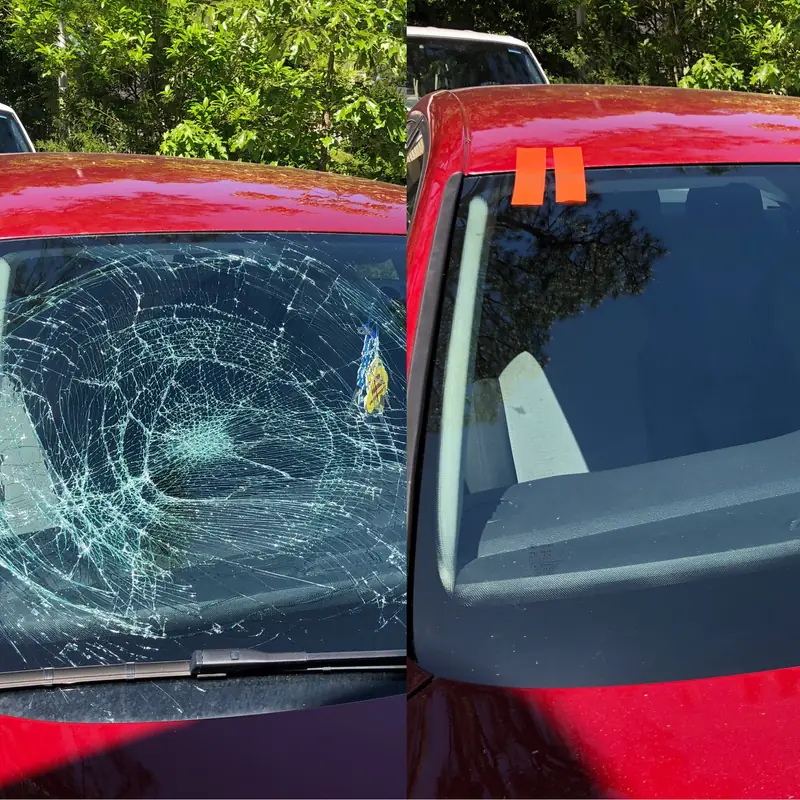
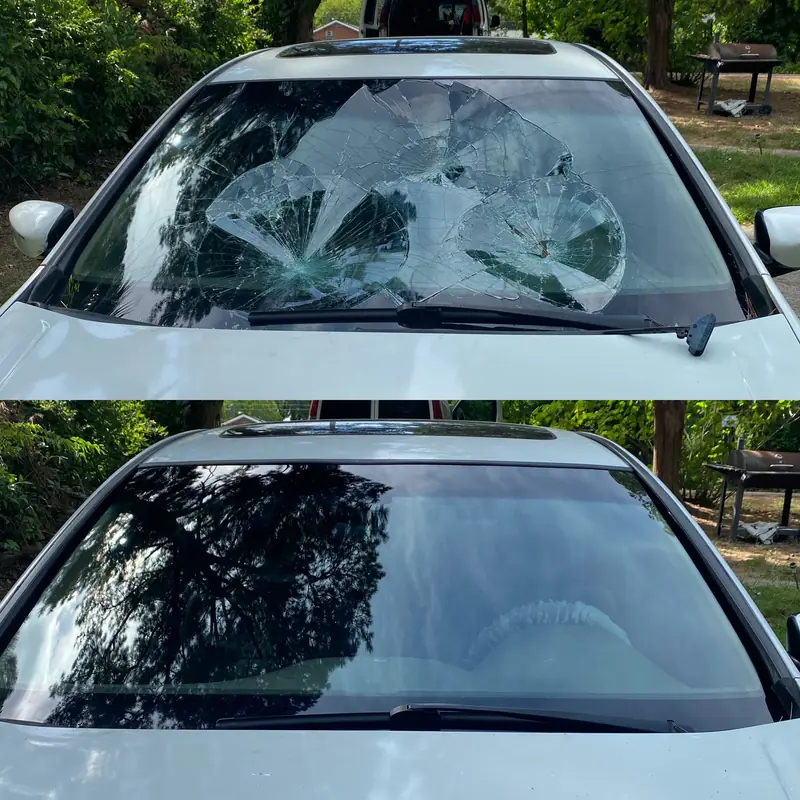
A chip is a break that has not decided yet
A stone off the back of a truck on the highway strikes the outer sheet of the windshield and knocks out a small cone of glass. That is a chip: a bullseye, a star or a short leg, with the plastic layer underneath still whole. The pane is still doing its job. What has changed is that the glass now has a weak point that wants to grow.
Growth is what turns a chip into a replacement. Heat in the car, cold air from the vents, a pothole or a hard door slam all push on the damage. Water and dirt work their way into the open break every time it rains or the car goes through a wash, and once a chip is contaminated, resin has a harder time bonding to it. So the honest advice is to look at a chip when you first find it, not after a month of driving.
Clean, fill, flash, finish
Brent starts by looking at the break, not by reaching for the resin. Size, depth and where it sits decide the job. A small chip away from the driver’s line of sight can often be filled and stabilised so it stops spreading. If the crack has already run, or the damage sits right in front of the driver, he will tell you plainly that replacement is the better call. Skylar Poole’s review praises exactly that: “transparency and swift quality work.”
The fill itself is craft done in a few careful steps. Loose glass and grit are cleared out of the break, an injector is seated over the centre, and the air is drawn out of the break so resin can be pushed into every leg of it under pressure. A flash of UV light then cures the resin hard, and the small pit left on the surface is topped off and scraped flush with the glass. Done well, the break stops where it is.
Where it happens is up to you. The business started out as Brent’s Mobile Glass and he still drives out, and there is also the shop at Suite D, 101 Lochlyn Place in Bonaire. Say which you want when you call (478) 972-7741, or send a photo of the chip to brentsmobileglass@gmail.com first so he can see it.
What a fill can do, and what it cannot
A fill stabilises the glass and makes the damage a lot less visible. It does not make it vanish. Expect a faint mark where the chip was, and know that going in. What you get in return is a windshield that stays in the car, which is the whole point when the other option is cutting out a good pane.
Afterwards, treat the repair like any new bond: avoid a pressure wash straight at the spot, and ask Brent what he wants you to avoid for the first day. Paul Fitzgerald’s review mentions that Brent gave him “great directions for aftercare,” and the same habit applies here.
If the chip has already spread, read what a full windshield replacement involves. Either way, call early. A chip that was found this week almost always repairs better than one that has sat through a month of Georgia weather.